Showing posts with label experiences. Show all posts

August 19, 2009

Miracles Do Happen

The taxi I was in was nearing the Kalanagar signal in Bandra East. Three street urchins, boys possibly 7 to 8 years old, on crutches were trying their luck at the vehicles that were waiting for the light to turn green. One would feel sad for these kids, maimed from birth or early in life, thinking of how the world would treat them differently compared to normal kids. Being the rainy season, it started to drizzle.

The boys on crutches continued to knock on closed cars windows while the drizzle became more forceful ...

What happened next was interesting. If you have visited a playschool or watched a play or event put up by kids you will begin to appreciate what I saw. Kids follow the normal course of activity as long as there is nothing that distracts them. If there is something more interesting going on, kids will immediately get distracted and will start to go their own way, following the distraction causing element or staring at it. Something similar happened here.

As the drizzle transitioned to light rain, the boys stopped knocking on windows. One of them shouted something to the other two. To which one of the addressees, balanced himself on his crutches and, with what I thought was his better leg, kicked a puddle which was just getting formed, in the direction of the first guy. To which the first guy replied by using his crutches as a lever to haul himself into another puddle so as to splash water on both the other guys.

The signal turned green. As I waited for my taxi to pull away, the boys were fully engrossed in their newly founded sport. They were now standing on both feet, the cripple that caused them to use crutches visibly gone, playing in the rain. I smiled. They were kids after all, stuck in the Big Bombay Begging Syndicate.

PS: I have always hated to give money to beggars. Have you ever thought of what happens with the change you give beggars? I hear that it makes its way to shady markets where shopkeepers in need of change buy Rs.90-95 worth of change by paying Rs.100. A 5-10% brokerage fee for the Begging Syndicate. The worker-bee-like kids get a vada pav a day and 60ml of tea. So next time you see a begging kid. As him if he is hungry. If he indeed is, buy him some food or give him that spare biscuit pack you have.

June 25, 2009

The 1/4 life Crisis

Does any of this sound familiar …

1. Feeling "not good enough" because one can't find a job that is at one's academic/intellectual level
2. Frustration with relationships, the working world, and finding a suitable job or career
3. Confusion of identity
4. Insecurity regarding the near future
5. Insecurity concerning long-term plans, life goals
6. Insecurity regarding present accomplishments
7. Re-evaluation of close interpersonal relationships
8. Disappointment with one's job
9. Nostalgia for university, college, high school or elementary school life 10.
10. Tendency to hold stronger opinions
11. Boredom with social interactions
12. Loss of closeness to high school and college friends
13. Financially-rooted stress (overwhelming college loans, unanticipated high cost of living, etc.)
14. Loneliness
15. Desire to have children
16. A sense that everyone is, somehow, doing better than you

An author somewhere has called this phenomenon (of experiencing the above symptoms) the Quarterlife Crisis and has authored a book about the challenges of living in your twenties.

Though I haven't given most of these much thought, at some point or another some of the above symptoms have clouded my thinking. I could count 13 out of 16 - some more intense than the others … which makes the hit rate 81%. (FYI, I left out 1, 15, 16 - before I get mail asking me about my desire to have children ;))

Damn this! Kiddish before 12, teenager issues till 20, quarterlife crisis till mid 30s, midlife crisis in the 40s, prostrate issues after 50 … when is a brother supposed to be enjoying himself? :)

June 23, 2009

Development is the bane of our existence

Some thoughts as I return from a trip where I had a taste of rural life ...

The capitalist system we work in encourages us to do things faster and better with each passing year. Corporates are incentivised to grow faster than the previous year. Profits must be larger than the previous year. Costs must be lower than the previous year. These invariably get passed on to us which makes us humans enter a race, trying to do things faster than what evolution permits ...

… With each passing year, one works harder, runs faster to move ahead because if you do not others will take your place. You try to do things at 30 - that which you are meant to do when 35, achieve things at 40 - that which you were supposed to achieve at 50 … Why? … what do you plan to do in those additional 5-10 years you may possibly gain? (if you don’t kill yourself in the process)

… it all leads to stress and stress related problems … we then spend billions developing drugs that make us live longer with these illnesses …

The race to scale also incentivises man to standardise … agriculture is also standardised ... killing bio-diversity in nature …

Development is the bane of our existence … the more we invent, innovate, develop - the more we substitute our natural instincts and abilities for artificial ones … all to achieve more - the race to beat evolution, which hastens our doom.

June 8, 2009

Update: Know they pension plan

Some time ago, I posted about having adequate knowledge of where investment managers put your money to work. As an update, I managed to get a cash flow plan of the scheme. Imagine my shock when I present valued the 'capital' and the 'fees' (Present valuing means discounting all future cash outgoes to present terms to know what it would mean if everything were to be evaluated on todays terms). The fees were a crazy 18%!!! ... which means that if I invested all monies today, 18% would go to this institution as fees for managing the capital. To give you an idea as to why that is crazy, mutual funds take around 1% (0.5% when one buys and 0.5% when one sells), alternative asset managers take close to 1.5% - 3% to manage wealth. The next time you are sold a plan, inquire about the fees

March 30, 2009

Know thy pension plan

I was the audience. A pitch was being made to buy into a pension plan. The salesperson gave the keeping aside for old age spiel. In short the dynamics were like this - I was to put in a fixed amount for the first five years, say INR x per annum. From thereon, till I was fifty, this cash would grow and after I turned fifty I would get a monthly income from this kitty till my passing into the next world.

She was doing her job well until the point where I asked at what rate my cash would grow between the last installment and me turning fifty.
“15%”, came the reply.
“Will you guarantee that?”
“Well we don’t guarantee it but if you invest the money in an aggressive mutual fund you will see those returns”
“Which mutual fund? I thought this was a pension plan”
She unfolded the literature for the plan. It showed options of allocating my annual contributions towards various asset classes – the most aggressive of which (also took on the most risk) and would, assuming the world didn’t fall apart in the intervening years, assuming that Indian equity markets delivered, assuming the fund manager wasn’t a rogue, assuming the companies in which my pension money was invested didn’t blow up due to fraud, bad management, business cycles or otherwise and assuming a million other risks which my tiny brain couldn’t fathom or whose impact I couldn’t ascertain, would potentially deliver 15%! … It was getting clear now …

“So your literature says 15% return annually if I invest in this scheme and allocate my pension to this asset class (Fancy term 1: ‘asset class’ is money that is exposed to similar risks – bonds, shares, etc are examples of asset classes)
“Well on the letterhead we can mention a maximum of 10%. But you can get 15% if …”
“Why 10%? You just said 15%!”
“Well sir, on the letterhead …”
“OK. No issues, So if your letter mentions 10% I assume my cash grows at 10% in the intervening period.” … PS: whatever you may hear from stock brokers, cash growing 10% assured annually for a long time is a pretty good investment, especially for pension plans
“No sir that again would depend …”
“Then why mention 10% on the letter?”
(Uncomfortable babble) … “Sir you can choose our as your asset class. The current NAV (Fancy Term 2: NAV means Net Asset Value – the price of a mutual fund at any given point in time) is INR 4. The NAV will surely rise (?) and your pension money will grow faster than 15%”
(I smile) … “What was the offering NAV?”
“INR 10 sir”
“Don’t you think it’s a concern that it has fallen from INR 10 to INR 4?”
“It’s a five star scheme sir and they invest in AAA+ corporates” … she doodled AAA+ on the literature, possibly to drive home the point
“Is there a possibility the NAV can drop further?”
(again that uncomfortable silence)
“Never mind … I’ll take this literature and get back to you”

As I was leaving I felt a little sorry for grilling her after I came to know about the asset classes logic. I understood the plan fundamentally then but was exploring the possibility that the pension plan scheme actually had a fixed rate of return. There was none. Instead there was a hell lot of market risk. (It actually seemed a clever way to seek contributions to the company’s mutual fund schemes) It called for taking a call on the capital markets for the next 23 years. (I’m around 27, and it would be 23 years till I turn 50). Ideally I would like my pension money to be risk-free. A large portion, say 95% of it, should grow at a fixed rate and the rest in equity shares of AAA+ corporates and pension funds should see to it that the float (Fancy term 3: Float is the premium on insurance / pension contributions collected by such companies in this business) is managed in a similar way. Unfortunately the fees component from selling these products has become huge income drivers for banks. A cross-sell like this gets fees form the pension plan as well as the mutual fund. Obviously bank executives will not want to sell the safer plans which gets fees for just the pension fund.

Just to give you one example of the impact a decision like this will have, assume someone invests in this scheme (most people will eventually). Their money grows in this mutual fund based pension plan till they are 49. Just before they turn 50, we see a recession the likes of today, there is mayhem in the markets and they are left with the capital they started off with, maybe less, which over 23 years has lost its value due to inflation. Assume that this was their only safety net. Isn’t their retirement royally screwed? Where has all the hard work to support old age gone? What if there was someone with a terminal illness at home? As usual the only beneficiary is the bank manager who collected bonuses every year for growing the capital (maybe completely due to luck) till our friend grew 49 and then who gave up his bonus when the fund went under.

Unfortunately, most people are unaware of what they sign up for in such schemes. One old-timer I know very happily told me that he invested most of his savings in a fixed rate investment which is market determined (?). My attempts to explain that there is no instrument that can pay a fixed rate and at the same time be market-determined was met with a “Do you think the managers at the insurance Co are fools?” Well they were not fools, they met their annual targets and scooted off into the sunset.

Financial innovation may have got people access to investment options they never would have, which is a good thing if they understood it. But financial innovation coupled with ignorance could well be disastrous. Know thy investments!

February 15, 2009

Machiavellian Infomation Overloads

I have stopped reading newspapers. Unless of course it’s a lazy afternoon and the options to spend my time in other pursuits are non-existent.

There was a time when I used to read every bit of news that came along. As a student, I read the Economic Times (even though at the time I could not appreciate the significance of most of the news), The Times of India and the Bombay Times (for funsakes). I was told that the middle pages of the newspaper are the ones where the juice is. The Editorials and comments by wise men of industry and society were on these pages. As a young mind, one was supposed to assimilate the oracle-like opinion (no matter that it could be released verbatim later in front of a group of stunned teenagers … man this guy has god-level insights!) All this until one day some few months ago, I saw one of my friends draft a press release. And no my friend is no journalist; we’ll come back to him a bit later.

Noam Chomsky is a Professor of linguistics at Massachusetts Institute of Technology and given his background in studying languages and their structures ends up learning a fair bit about society. He says that as part of a democratic setup, people have access to a lot more information than those making decisions for that society would be comfortable with. Making policy and implementing decisions thus becomes a challenging process to the extent that ones reputation hangs on its success; and this is true across the spectrum from industry to state. Hence the need to control, filter, jazz up, seduce. In other words: shape public opinion.

One look at Indian media today and you will know what I mean. Apart from just information dissemination, there is entire other world where the significance of the news is forced down my throat. I as a receiver of communication am not allowed to think. The broadcast of any news in any medium is accompanied by ‘expert opinion’ where there is a well known celebrity-like media friendly character who sagely comments on what has transpired and how it will affect our life.

Who is our ‘expert’? What are his credentials? How has he performed in his line of expertise? – Are questions which immediately come to mind. Now to some slightly uncomfortable questions - Who selects him? Why is he on the show? Does he have vested interests? Who does he represent? More importantly, why is he predicting events? What is his track record in predicting events? These may never be answered.

Coming back to my press release drafting friend – Why was an employee drafting a press release? Isn’t that a job for a journalist? Does this rob the journalist the opportunity to ask important questions? Maybe if he asked, the merit of the release would lose significance. Maybe it would be relegated to the obscure parts of the newspapers which are used for personal packing of dirty linen during a long trip. How much more is there in this release that does not meet the eye? Are journos reduced to selecting what news goes where? Do they get incentivized for selecting what news goes where? Who decides these incentives? Why all this cloak and dagger style?

Don’t get me wrong. I have nothing with the withholding of information. In a competitive world, it is necessary. One can’t publish confidential data in the name of the free press. My issue is more with the unholy nexus of journalists and publicists. News has moved on from reporting to generation and sensationalism. Grand quotes from people who have given up something valuable to be on the front page. Which means we are being misinformed. Which means reading newspapers is a waste of time.

You may ask what does one do to be upto speed with the happenings around you? Scan the headlines of a respectable media org. Mostly it is possible to jazz that up to. But given that you see it for a split second, the ability to be influenced is much less.

There is another non-Machiavellian reason that I have stopped reading. There is just too much information. I once tried to list down the central theme of the previous days news stories. I couldn’t. Rarely did I come across an article I remembered. That too because I relayed it several times in my head and told others – it was interesting. Otherwise, for most of the time it was just too much noise. Filtering the noise to come to matters that concern my work / me is painful. I’d rather scan the headlines of a publication that focuses on it; or wait for somebody who finds it interesting to tell me about it. Either way I am not missing much.

December 6, 2008

... and politicians across the Board put their foot in their mouth

One of the positives in the gloom of last week is the mass public outrage at anyone of political ilk. I was at a public rally on Wednesday to show solidarity and for the first time in my life I saw Indian civilians with blood in their eyes. More than 100,000 people thronged the streets of South Mumbai shouting slogans against Pakistan and vilifying politicians.

It has not just been inaction of the government machinery that has stoked public anger but the foot-in-mouth statements made by politicians in the wake of the terror attacks, which spanned from inept to rude and from insensitive to shocking. Some creative minds have channelized this energy into some interesting posters which have been photographed by an anonymous person and which found their way to my inbox.

The Communists fell first. Comrade Achutanandan, the Kerala Chief Minister, was asked by slain soldier Maj. Unnikrishnan’s father to vacate his premises. Clearly not used to such snubs, our Comrade challenged a dog to visit the martyrs house had it not been for his sacrifice. To which our friends at the rally had this to say –
For my non-Hindi speaking / reading / understanding friends reading this blog, the breaking up of some of the syllables in the Comrades name, especially the part in between the two ‘a’s refers to a certain part of the female anatomy. Comrade still refused to apologise despite being criticised from all quarters. Finally Prakash Karat, the CPI supremo did the apologising.
Others (below) indicated that they prefer the canine.
Next caught with his pants down was Maharashtra Chief Minister, the Hon. Vilasrao Deshmukh, who invited Ram Gopal Verma (RGV), a Bollywood film-maker and his actor son, Ritiesh Deshmukh in his official entourage to survey the damage done to the Taj. RGV has in the past made movies like RGV ki Aag which you can review here. (Note - RGV ki Aag flopped at the Box Office). The move surprised even Bollywood. That resulted in this response –

And then from a respectable name, the meaning of which is analogous to ‘landlord’ his name was adapted, with a few nifty changes, and captured in the font of RGV’s previous movie posters, a name that means ‘a national fool!’

Mukhtar Abbas Naqvi, the BJP Vice-President, had probably never interacted with the urban, educated and presentable woman before. When he saw some of them in media coverage deriding politicians he ejaculated (pun intended) ‘Some women wearing powder and lipstick have taken to the streets of Mumbai …” No specific interesting poster on this, but the remark drew the ire of women parliamentarians, some even from his own party.
The poster above summaries most of the blunders made by Indian politicians in the aftermath of the terrorist attacks. It includes RR Patil, the Deputy Chief Minister of Maharashtra saying that such things happen in big cities. In bizarre logic he justified the statement by indirectly saying that he had saved 4,800 people (They came to kill 5,000 we contained the damage to 200).
And this man was conspicuous by his absence – Raj Thakeray of the MNS did not mind as the NSG, which had North Indian representation, including the slain Gajendra Singh - who lost his life in the operation - protected our nation. But then stooping low as their wont, the MNS put up a poster outside Malad railway station clearly mentioning that three ‘Marathi’ top cops, Karkare, Kamte and Salaskar had gave up their life to protect outsiders and foreigners.
All the gentlemen above are however left far behind by the Hon. Shivraj Patil, who has been in stellar form, wearing his incompetence on his sleeve. In what can only be described as shocking, the Home Minister gaily announced the size and time of arrival of the assault team. Later, in an interview after his visit to Mumbai, Mr Patil told the media that the terrorists had left Cama Hospital and the railway station (both terror targets) before he had reached the site. Dear Shivraj, what were you smoking? Did you expect to have tea with the terrorists? Maybe you wanted meaningful intercourse as you indicated when you took charge of the Home Ministry.

December 4, 2008

Of root causes and a change of perception ...

It was 10 pm on 26th November. I was at my office, working on the business plan of an opportunity we are currently evaluating. For some reason the financials were not stacking up. Frustrated I decided to call it a day. I was to travel early next morning and had to pack. I plugged my earphones and listening to some of my favorite tracks, made my way to Churchgate station.

Minutes earlier, not too far away CST, Leopold Café and the Taj Hotel were attacked. For a good five minutes I was on one of the two roads that connect these locations to the Oberoi-Trident. A few minutes later the Oberoi was under siege. In hindsight, there was a good probability of the terrorists using the road since it has relatively less traffic. It gives me shivers to think that the walk could have been my last. I was of course, oblivious to the developments.

A lot has changed for me when I reached home and took in the full impact of the attacks. I have never been prejudiced towards Pakistan and have always attributed the misgivings between India and Pakistan to a narrow minded leadership way back in 1947-48. When two men who both wanted to become Prime Minister of a young republic resorted to religion to resolve their issues. Events, however strong, in other parts of the country did not change that. OK, Kargil veered me a bit to the other side but I was optimistic that things could be worked out. But last week was the last straw. The scale and impact of the attack has been horrific. The thought that I could have been a target has been unnerving. And the heap of evidence against Pak has been too hard to ignore.

In a thought that surprised me as well, I don’t think war is a bad option. It is a sad day when the educated and the objective crowd start thinking of war. It means that solutions are extremely limited and that the inevitable is necessary. Apart from just plain evidence, this time a long time Pakistan ally, the US has made statements like ‘India has the sovereign right to protect itself’ and ‘Pakistan is an international migraine’. Strong statements if you look at the past US-Pak relations.

It also makes me wonder why does most of world terror have an Islamic face? What makes Islam a favorite exploitation ground for religious extremists? Why is this religion repeatedly and consistently used out of context compared to other religions? I have Muslim friends and they are good and righteous people. If their faith had conflicting ideas with them being good human beings they would not be Muslim; which says that it’s definitely not the religion. Is it the method of delivery? Are there too many middle men subverting the message of the Prophet and mixing it with economic and political themes? Other causes do not seem to fit in – Education? There are poorly educated nations in South America and Africa as well. Resourcefulness? Prominent sponsors of the Middle East are so wealthy it stinks. Economic well-being? Ditto.

Which brings us back to political agendas. Though it seems the most plausible, it will be interesting to know.

June 1, 2008

Gloomy May

May has finally ended. It was a bad month bringing bad news with amazing regularity that at one point I was expecting bad news when the cycle said it was due.
Two tragic accidents and passing away of young people my age ... A middle aged heart attack case ... A little girl losing her mother ... News of a friend with a disease that is in advanced stages ... A celeb classmate who drowned during a picnic ... An old lady who is related in a longish sort of way ... And a freak accident on my way to work when four unfortunate people fell in between bogies while boarding the 8:08 am Malad local ... (Thankfully they were saved in time)

It's a gloomy feeling to know that the same could happen to you. The kind of lives we lead these days - stressing our bodies in the name of competition, eating junk and when we eat healthy food we eat at wrong times; liberally using chemicals and intaking toxins in pesticide 'cleaned' food, pollution and wot not - I won't be surprised if my generation burns out when they reach forty, maybe thirty five.

On a philosophical note, I got a quote which was made by George Costanza of Sienfeld. It goes like this -
"The most unfair thing about life is the way it ends. I mean life is tough , it takes up a lot of your time and what do you get at the end of it ? A death. What's that, A Bonus?!? I think the life cycle is all back wards. You should die first , get it out of the way. Then you go live in an old age home and get kicked out for being too healthy.Go collect your pension, then, when you start work. You get a gold watch on your first day. You work for forty years before you are young enough to enjoy your retirement..You drink alcohol , you party, and get ready for high school. You go to primary school ,you become a kid, you play, you have no responsibilities. You become a little baby, go back ,spend your last 9 months floating with luxuries like central heating, spa, room service on tap, then you finish off as an orgasm!! Amen"

RIP dear friends. I may have not known you very well but I'm sure you enriched the lives of everyone around you. Shine on you crazy diamonds

22nd June 2008:

PS: Systematic Confusion has more time and energy now that his exams are over. He has a much better take on the same subject here

December 23, 2007

Celebrating India with cognac

Some time last month I had the pleasure of being in the private audience of Prof Ramchandra Guha, noted historical commentator (one of the best we have says abyuthvad) and cricket enthusiast. What struck me apart from the fresh smelling straight-off-the-press, duly authographed tome titled 'India after Gandhi' was the passion of the man and the eloquence with which he presented his case to an audience from different nationalities.

I say he was passionate because I was sitting right in the first row (part reason being that I didnt get a seat at the back, but was grateful later to my twist of fate) and I could literally see the twinkle in the eye and feel the energy with which Prof Guha made his points. I say he was eloquent because he made an assortment of foreigners who had come to celebrate India's economic success realise that they should be instead celebrating India's political success.

Reading his book over the weekend I realised why the man was charged up. It's because India is such an antithesis, its baffling to logic to understand its existence today; and once you get to that line of thought even more baffling to realise that almost a billion people get up every morning and go about their business taking it for granted that India still chugs on regardless of its diversity.

Coming back to the talk at the fabulous Lalitha Mahal in Mysore, Prof Guha went on to explain that inspite of these diversities, and given the odds at any given point in time, its nothing short of a miracle that we have continued to exist as a single democratic sovereign entity. There have been attempts to rule India with an iron fist. Fortunately that hasn't been the case and the secret lies in our diversity. A list of reasons were presented, which according to the Professor is the glue that binds us together. I remember just three. One, our Constitution, which empowers every Indian adult with equal electoral rights. Two, the separation of important guardians of the Constitution like the Judiciary and the Election Commission from the Government and finally the game of cricket. Prof Guha's book also throws light on the horrors of Partition; and the cunning and intrigue on either side of the Border. For someone like me who was born long after Independence, the account made for interesting reading.

Looking back, todays economic boom is largely a byproduct of our political success. Had we broken up after Independence into a clutter of princely states there would not be the large market that drives consumption. Had we not integrated, the resources of the East, the technology of the South, the enterprise of the West and the spirituality of the North would not create the unique dynamite that is India.

I left the lecture feeling extremely patriotic and proud to be Indian. At that moment I just celebrated the concept of India with some vintage cognac (and later on with an assortment of liquor shots!) and forgot all those things about India and Indians that sometimes bugged me, even better, I felt that I could understand why we are the way we are. 'India After Gandhi' is a must read.

August 9, 2007

The lighter side of work

Half a day is spent at work. And if you start at the age of say 23, and hang your boots by 58, you will have logged in 25 years of service and that translates to 12.5 years of contiguous work (at 12 hours on an average). So offices take up a substantial part of our waking hours (not counting colleagues who manage to catch forty winks in creative positions to avoid being caught!) and I decided to blog something on office life. Below is the cumulative experience of self and many other friends, most of whom are in investment banking circles ...

Offices are beeping places. From the start of the day to the end the entire friggin place beeps. There are telephone beeps, callback beeps, computers beep, doors beep. Thank goodness that people don't. (Or did I just hear someone beep .. rather buurrp). It rings in my head all the way home. Beep ... Arrrgghhh!

Bankers are a uniform lot. Light plain shirts, dark pinstripe trousers, neatly combed hair parted at the side in an oh-so-immaculate parting. Round rimmed glasses. The sophisticated accent ... Shit! Is this my future?

Microsoft Excel is a gift. The more I court it the more it shows me different things. But life has become complicated after excel showed up. People demand fancy graphs, creative tables, single line logic formulae ... Sometimes I feel more of a programmer than a banker. And the hard part is I had divorced computer logic the first time we met.

PowerPoint's are no longer the 'five points on a slide in font size 20' routine from college. Bankers love to pack data on a slide like sardines in a can. Sometimes using font size 9??!! Damn. Animations (even the subtle professional ones) are a big no-no. Takes the fun outta life.

Lunches and dinners are a quite, serious affair with perfectly co-ordinated hand and mouth movements. If you end up eating with bosses you end up stiff rather than full. I have always eaten with my (clean) hands. The cutlery put up at formal dinners looks like a kit on a post-mortem table. Last time I tried eating chicken with a knife and fork, the chicken resurrected and flew off the table. Whatever happened to good old hands???

I have always squeezed the teabag with my fingers. Now I use an elaborate mechanism which involves using a spoon and wrapping the teabag around it, winding the string and squeezing the teabag in the process! I want freshly brewed piping hot tea. Middle finger to you teabags!!!

Finally, I have a grouse with the air-conditioning. I think they mistook me for an Eskimo during hiring. Or did they think I was cold blooded? Maybe its to chill down the heartbeat racing treasury chaps? I don't know but after encountering Mumbai's rains on the way to office you don't want to sit in an AC. Brrr ...

So this is it, until I come across a fresh set of experiences ...

Disclaimer: None of the above is to suggest that I do not enjoy my work. This was just an attempt to see the lighter side at work.

December 5, 2006

Poker and Walker ... a nice combination

Well this was not inspired by 'Casino Royale', the latest Bond flick. It all happened when I was in Mumbai last month for Avenues at IIT-SOM for Avenues 2006, a business simulation game. On the way back we Mandevians played poker. For me it was the first time. And at the end of two days and countless games I made a profit of Rs.2.00 Obviously the stakes were small with cover charges of 25p and a stop loss at Rs.20. Nonetheless it was a great experience. We didn't have tokens but Harshit Jain made good the absence with his chopdi (notebook)

A few days ago we played poker again in the basement of the hostel. This time it was different. First, it was international. We had participation from Belgium, France, Germany, Morocco and India. Second, there were tokens finally instead of the chopdi toting Harshit Jain. Third, we had Johnie Walker Black Label for company.

The exchange students were good players. Its a different thing that Verghese always ends up winning some. The tokens added to the jazz and the JWBL was superb. I decided to have the Scotch neat. Bloody smooth. Three large ones later I was still feeling good. And mind you, no hangover in the morning.

I was wiped out in the first round and went to play some table tennis. I returned later to play for Verghese and as lady luck would have it I had two aces in my hand and one round later I had another on the table. Undoutedly, I cleaned up a huge pot I dunno how much coz by then the Black Label had had its effect. As for the net winnings, as usual I broke even. No profit no loss!

L-R: Tim, Thibaut (both from Belgium), Slyvia (Italy, onlooker), Moi, Verghese (Indian reps!), Robert and Evaristo (both from Germany)

Hasan (Morocco) had gone to get some stuff hence not in the pic.

October 25, 2006

Dharamsala trip (Chapter 9 - Mundane things & Alls well that ends well)

The small things that go on to make a great trip. Some bloopers ...

Me asking the receptionist: "Is this Dal lake the same as the one in Kashmir"
Harshit (after some apple cider) sees parallel water pipes between two cottages: "I din't know there was a railway track here"
Pradeep (when being told that Smirnoff was sold at 900 bucks a bottle): "We got it at McLeodganj for 400." We were subsequently driven off by the theka owner. I think word had then spread around that there were three guys who are easy targets for conmen. We bought some shitty liqour from this theka guy at a ridiculous price.

Watch this space for some more witty ones if I remember them.

We got a better deal when coming back. A straight bus to Delhi. 10 hours flat. 2 hours later we were back in the Hostel. It was a great experience. The month looks to be full of travelling. Im off to Mumbai on the 26th to represent MDI in 'Colloseum' at 'Avenues 2006' - The management fest of SJMSOM IIT Mumbai. It seems to be a nice trimester!

Finito

Dharamsala trip (Chapter 8 - Second day at McLeodganj)

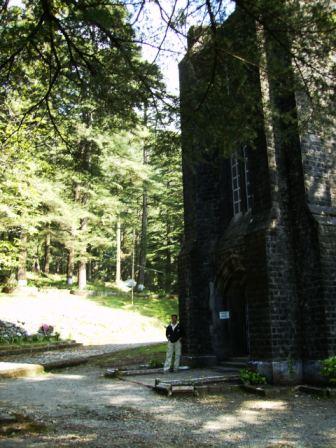
St John of the wilderness is the oldest cathedral in North India. Built in 1853 it is known for its unique gothic style. The church grounds ar filled with coniferous trees and the whole atmosphere is still and calm. Also buried here is Lord Elgen, some Brit bigshot celeb of the 1800s.

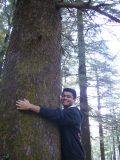
Conifers!

St. John of the wilderness

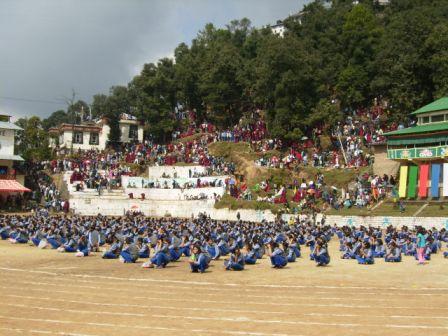
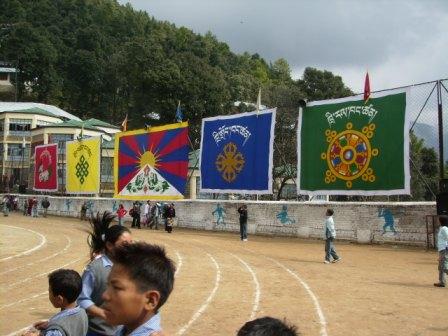
Tibetian Childrens Village - is a school. We were just in time for their annual day celebrations. It was a great experience. When you enter the complex you feel like you are in the Collosuem. The accompanying music was great too!


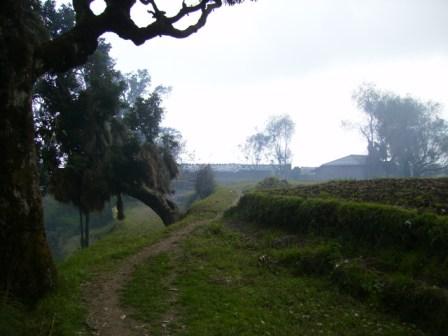
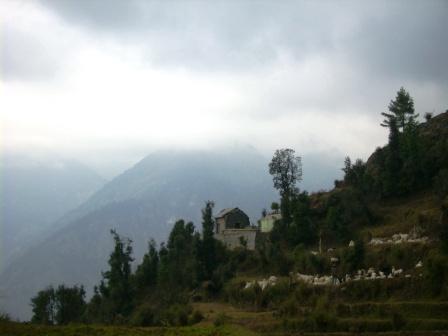
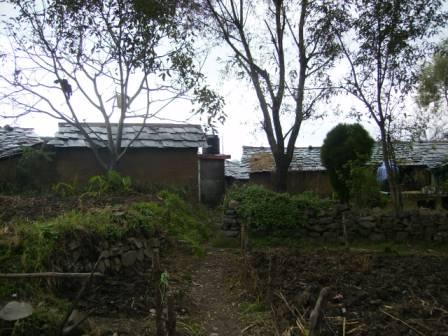
From here we trekked to Naddi - supposedly the highest point of Dharamsala. On our way back we went through quaint villages.


And finally we visited the most famous landmark at Dharamsala - The Buddist Monastery and the home of the Dalai Lama.


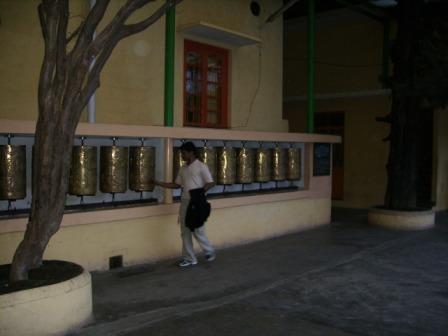
The prayer wheels. Each wheel is filled with some prayers and everytime you roll the wheels, the person is granted the prayers in it. Wierd ... I turned the wheels without knowing whats inside! Just hope it was meant for some good.

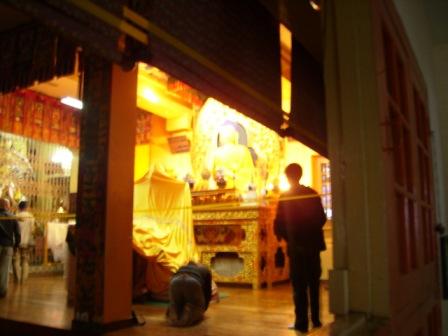
The throne of the Dalai Lama. Pity he wasnt there!

Dharamsala trip (Chapter 7 - McLeodganj)

Well you just can't describe this place with words. You have to see it to believe it. The best part of the trip.

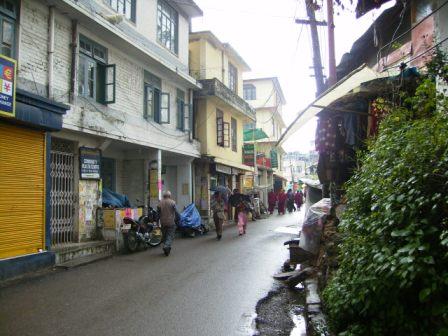
McLeodganj market

On the way to Bhagsur

The Bhagsurnath temple

Behind a cottage ... picture perfect

Trinetra cafe. Stop for refreshments

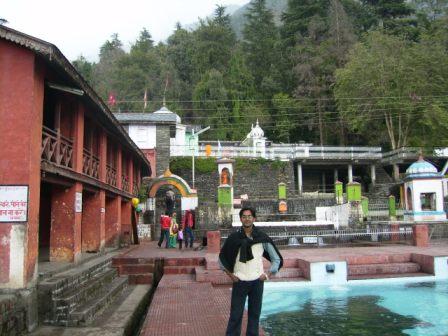
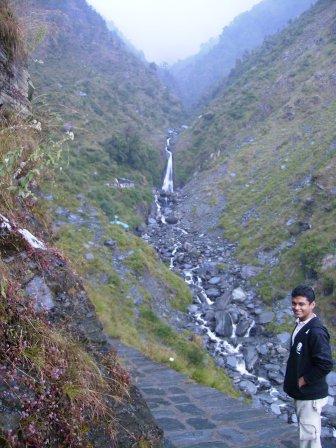
The trail to the waterfalls

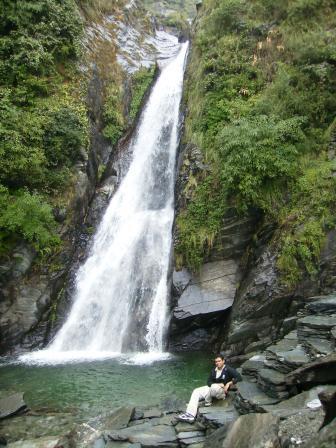
The Bhagsurnath waterfalls

Shiva cafe ... last point for the trek ... about turn!!!

It was Old Monk for company. Kept us warm throughout the trek on a rainy day. Lunch was Tibetain. Tofu, Thuppa (tibetain noodles), Thukpa (clear soup), Tibetian bread and veggies. That was almost the end of day two.

Dharamsala trip (Chapter 6 - Dharamsala)

Some pics ...
Capturing evening in Dharamsala

What people here do for a living. We demand a course on this topic next term. Entreprenuership will have a new meaning!

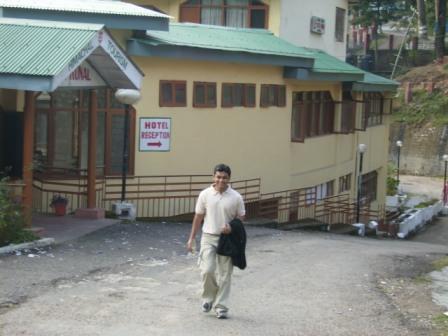
The hotel which looted us ... Damn its the other way around here. Private hotels are cheaper!

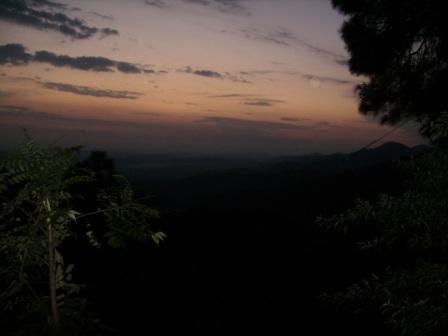
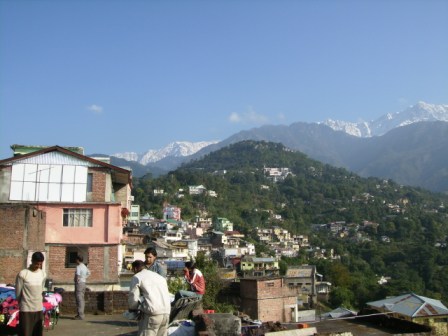
The view in the morning. The small town on the mountain and the Himalayas in the background.

Dharamsala trip (Chapter 5 - The Gypsy Kings)

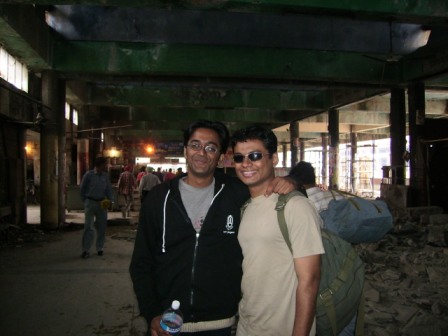
With Harshit at Jalandhar bus stand a.k.a East Berlin

With colourful experiences behind us we continued on our quest. The local vehicle dropped us finally at Jalandhar. The bus stand at Jalandhar looked like East Berlin from the past. Rubble and debris all over the place. Not that it did matter, what was worse was that there is nothing called an enquiry desk, no timetable, nothing. Just conductors shouting destinations. We took a bus to Pathankot. They screened a Punju movie 'Dhee Jatt Di' which mysteriously rewinded every now and then. If that wasn't enough, they started blaring Punju music. Punju music also runs along similar business models explained in the above post. There seems to be one singer (or all of them have a similar tone which seems unlikely!), there are standard beats, standard lyrics too. Most songs revolve around 'Pind' (village), 'mitran' (friends), 'daroo' (alcohol but whiskey in this case), 'gaddi / truck' and similar rustic themes. Such amazing levels of economies of scale. If only Indian manufacturing had taken a leaf out of the Punjabi music industry we would have beaten the Japs at concepts like Lean Manufacturing.

Enjoying 'Dhee Jatt Di' enroute to Pathankot - Cheap entertainment for cheapos ;)

Another striking feature is that Punjus have their personalised metric system to measure time. No two persons gave us a common estimate of reaching Dhramsala. Huge volatility in their estimates, ranging from as low as 2 hours to 8 hours!!! As usual I bow to their brilliance.

Pathakot is a lovely place. Alcohol is available at unbelievably low prices. Possibly because its a cantonment area. (Tip: If you wanna go on a holiday you know where to go!) With Old Monk for company ;) we boarded a bus to Gaggal. From Gaggal we took a bus to Dharamsala. Finally after 24 hours and million bus changing operations when we got down it was heaven. We felt like Gypsies.
After a 24 hour ordeal ... Finally in Dharamsala

We went to a Himachal Pradesh Tourist lodge. 440 bucks later we realised that there were cheaper options. What the hell. We resigned ourselves to Old Monk.

Dharamsala trip (Chapter 4 - The Great Indian Con Trick)

If you thought that was the last of the studboys you are wrong. Morning brought us to Ludhiana where the bus stopped. LS and HS announce that this is as far as the bus will go and that he will put us on a different bus to Jalandhar! Some of the passengers scooted. Others, around 20 of us stayed behind. To cut a long story short the bus driver was beaten up, the conductor called his henchmen and before we were witness to a bloodbath we also decided that it was in our best interests to hit the road.

Now lets spend some time on the business model of our studboys. First they have a variable charge for all the forty passengers. In this case, the fare ranged between 240 and 400. Expenses like border tax, road tax are dealt with by playing 'Good Cop - Bad Cop'. The driver is the Bad Cop who runs away with the bus stranding the conductor / owner with some passengers. The Good Cop cries in front of the police, it fits in because the anxious passengers are around who have no clue whats going on. Fortunately, the police in this case are Sardars too. They fall for it hook, line and sinker! The bus meanawhile heads on, the others hitch a ride (who cares anyway). Somewhere at a major city along the way comes the coup de grace! The studboys put you on a different vehicle to your destination, Downgrade you from a luxury bus to a local vehicle, Pay a nominal amount to the new guy and scoot off. Wonderful I must say and I was totally impressed by the conceptualisation, planning and implementation. Pity they don't teach strategy at BSchools!

Dharamsala trip (Chapter 3 - The kidnapping ... almost!)

The bus stops at the border and some of the passengers including Verghese get down for a chai / smoke, etc. After around 2 minutes, the bus driver LS, sudddenly locks the door, jumps into the drivers seat and veers off the road into the wilderness!!!

Me and Harshit startled as we are, rush to the cabin and question LS, telling him about our friend (verghese). LS assures us that all is well and in 5 minutes he will tell us everything. The bus meanawhile jets like crazy in what was a bullock-cart path. It turns sharply at corners wide enough to let two cows pass. All this would have been OK if the bus had its lights on. But LS was apparently playing Chor-Police in realtime with real cops. The bus lights, headlights, etc was all OFF. The bus was rushing through the fields now in the dark without headlights, occasionally turning on the lights to search for firm ground!!!

At the other end, the police who were negotiating with HS were stunned too! How can you leave your passengers behind?! they asked HS. The reply was even better,"My driver is mad. He drives off likes this and leaves me stranded too. I dont know what to do." I have to hand it over to HS. What a looney way to answer the cop. And before one thinks this to be jest guess what, the cop (Sardar that he is!) believes the reason and murmurs something about how he cant catch the bus now that it has disappeared!!! Crazy place!!! Hilarious people these Punjabis!!!

The first thought that went through my mind was that the 40 of us would be sold as slaves to the Pakistanis. Too Drastic!!! I toned the thoughts down to getting robbed at gunpoint and being left in the jungle. Verghese meanawhile was asked to hitch a ride to Jalandhar on a truck. Fortunately, the negotiations (Harshit, me and onearmy guy versus LS) worked and he finally stopped the bus in a quarry. Some phone calls later (obviously it was my phone) LS decided to head back and pick up the others who were left behind.

We pick up the others some distance before the border and again get into the bushes to avoid the police. As luck would have it the police caught us again. This time LS cooly tells the police that he bribed the police some distance down the road and he can collect his share from there!!! Talk about transperancy! After 90 minutes of nerve racking moments we were finally on the road again, towards Jalandhar.

PS: Due to the stress and anxiety of the situation we were not able to take pictures here.

Dharamsala trip (Chapter 2 - The studboys)

At ISBT, we found that there was no direct bus to Dharamsala due to Diwali. We would have to change buses. The best option was Pathankot. But one dingy agent with an open air office wanted us to tour Punjab. So he convinces us that he has our best interests in mind and tells us to go through Jallandhar. Ahem! we have no choice or as Subir would put it, our BATNA (Best Alternative To a Negotiated Agreement) was low. So we say WTF! How bad can it get! and trudged to the bus where we met the studboys.

Lets call them Laurel and Hardy Singh (LS & HS respectively). The driver, LS was a thin bearded sardar. Along with him was HS the conductor, a fat Sardar in three-quarters and sports shoes. If you heard them speak you would prolly think one (LS) was chanting prayers while the other (HS) was lamenting. HS's voice made him sound like the biggest loser in the world. He was almost crying at times. Little that we knew beneath the loser face and sad voice was a master strategist, logistics expert and a don at negotiation.

The vehicle used by the studboys. I'm sorry I don't have a picture of the studboys. The biggest loss of the trip!

We left ISBT towards Jalandhar at 10:30 odd. After some dozen stops at random petrol pumps where they keep on filling 10 litres of diesel (?) per stop, they realise that the police is following them in a jeep. At the last petrol pump HS gets into the police jeep and negotiates. The bus moves ahead of the jeep and reaches the border. Dunno which state we were crossing coz it was dark. The issue of negotiation was some tax which HS dint want to pay. It was irritating that we were stopping so frequently but I would not have complained only if i knew what was coming ahead.